
In recent years, Peruvian cuisine has established itself as one of the main pillars of tourism. Its variety and diversity reflect the culinary traditions that Peruvians have preserved throughout their history.
Andean, coastal and Amazonian traditions have blended with European, African and Asian influences. Cuisine acts as a bridge connecting Peruvians with their ancestral past and has established itself as a symbol of national identity.
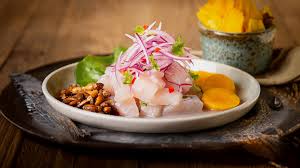
Cebiche is the country’s signature dish and reflects the fusion of the coastal fishing tradition with Japanese culinary techniques. Its origins date back to pre-Hispanic cultures, from the Paracas to the Chimu and the Incas, and symbolises the Peruvian people’s connection to the sea.
Peruvian Cebiche of sole
The guinea pig was domesticated in Ancient Peru over 5,000 years ago. The ancient Peruvians made use of its meat, which is rich in protein and beneficial to health. It provided a key source of food for Andean civilisations and, to this day, remains part of the traditional diet in the highland regions.
Chicken juane is a traditional dish from the Amazon region. The way it is prepared reflects the ancient cultures that cook food wrapped in leaves. It is widely eaten during the festival of San Juan and represents the syncretism between the Amazonian worldview and the Catholic faith.
Lomo saltado is the signature dish of Peruvian cuisine with Chinese influences. China and Peru not only maintain economic ties, but Chinese traditions are also an integral part of Peruvian culture. The use of a wok to stir-fry the meat and vegetables is the predominant Asian technique used in its preparation.
Crema volteada is one of Lima’s most popular desserts; it is derived from Spanish flan. It is characterised by its smooth texture and pleasant custard flavour, typical of European flans. Its name comes from the process of turning it out of the mould, which involves turning it upside down onto a plate.